Progressive Budgeting
Shape The Solution Early, Not Cut It Late
Late-stage value engineering cuts what’s easiest, not what’s best. Progressive budgeting shapes scope, cost, quality, and time together, early and continuously until the right solution emerges.
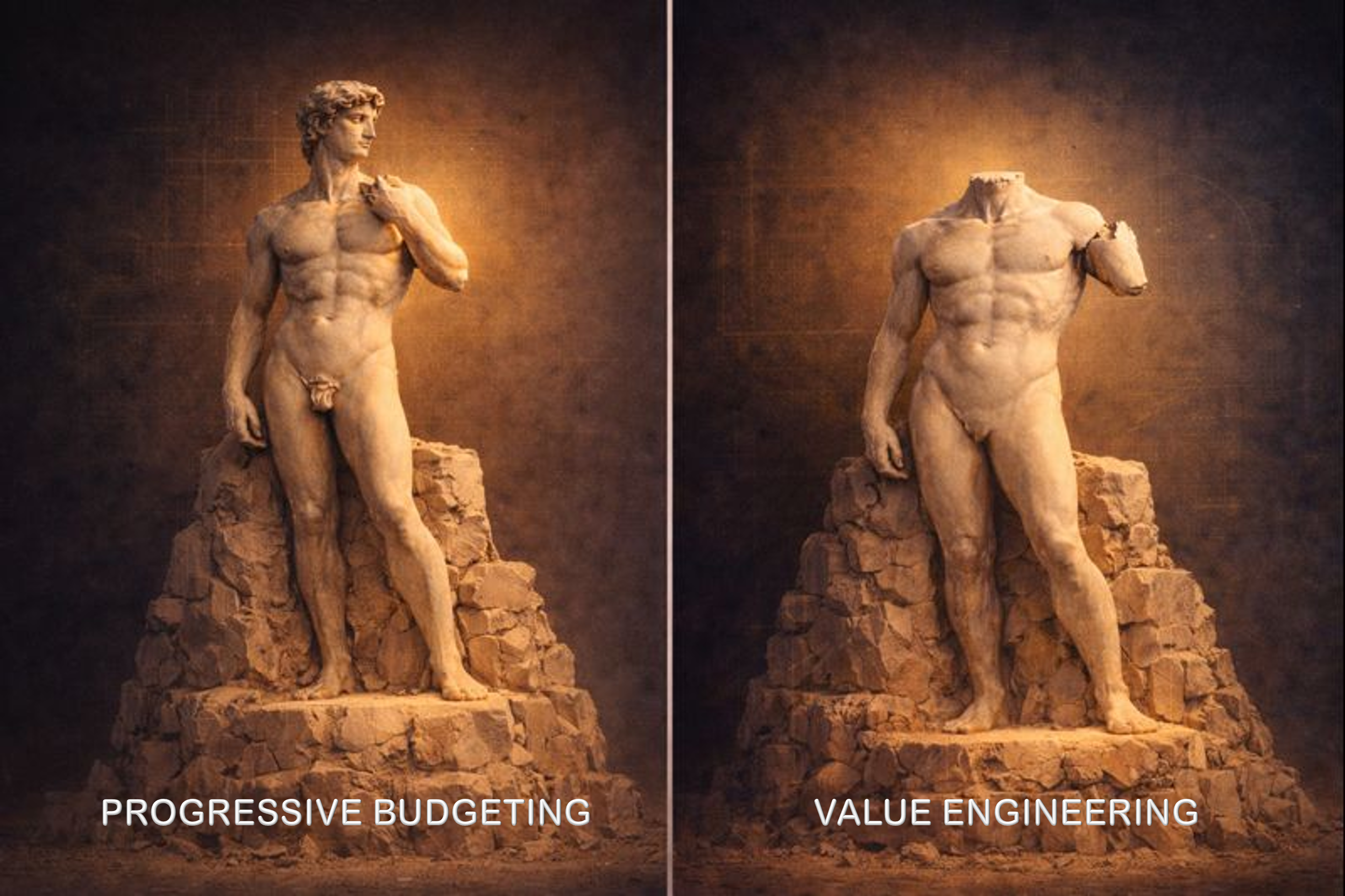
Late-stage value engineering usually happens when the project has already taken shape and time is running out. Under pressure, the fastest savings come from removing the most visible scope, not necessarily the scope that delivers the best value.
Progressive budgeting takes a different path. It keeps the budget aligned with the evolving design from the outset, using regular refinements and clear options to shape the solution deliberately, piece by piece, while there is still flexibility to make the right trade-offs.
Late value engineering in not optimisation, it’s damage control
1. The early stage moves fast, but the budget story doesn’t

In many projects, the early stage is treated as a race to “get design moving”. A budget is set with limited definition, broad allowances, and optimistic assumptions. Design then accelerates and expectations harden. The cost plan can’t keep pace, and the gap quietly grows.
2. The budget shock arrives after decisions have already hardened

Eventually the shock lands. Market movement, scope drift, missing allowances, and undercooked assumptions pull the number higher than expected. By then, the project is no longer flexible. Stakeholders are attached to what they can see, and time is already committed.
3. Late VE becomes a rescue exercise, not a shaping exercise

This is where traditional value engineering typically enters. It becomes a late-stage rescue with limited runway. Instead of shaping the best balance of scope, cost, quality, and time, the focus shifts to speed and immediate cost reduction.
4. The cuts are often “easy”, not “smart”

Late VE tends to remove what is easiest to identify and delete. The most visible elements. The discrete packages. The items that can be stripped out without redesigning the whole solution. These are quick fixes, but they are often the very features the client values most.
5. The deeper cost drivers are harder to reshape late

The real cost drivers are usually embedded in the design and delivery strategy, including services complexity, structural logic, facade approach, programme constraints, logistics, staging, procurement strategy, and risk allowances. Addressing them can produce a better solution, but it requires time, iteration, and alignment, which rarely exists late in the process.
6. The client experience shifts from “guided” to “surprised”

Late VE often feels like a surprise. It can feel like the budget was never properly managed or that the client is being walked back from what they thought they were getting. Even when everyone acts in good faith, trust takes a hit. Conversations become defensive and approvals slow down.
7. Rework multiplies and momentum stalls

Late cuts create downstream rework. Documentation cycles repeat. Coordination becomes frantic. Procurement starts and stops. Programme assumptions change. The project shifts from clean progression to a loop: redesign, reprice, re-explain, renegotiate.
8. The commercial outcome deteriorates

Late-stage cuts do not just reduce cost. They often reduce certainty and control. Time pressure forces compromises, risk sits in the gaps, allowances are squeezed, and trade engagement becomes reactive. The project becomes harder to execute and margin is harder to protect.
9. The real issue isn’t VE, it’s timing and method

Value engineering isn’t the problem by itself. The problem is waiting until the project is already “built” in everyone’s minds, then carving it back to budget at the last minute. When shaping happens late, the best outcome is already out of reach.
Progressive budgeting replaces late cuts with early shaping. It keeps the cost plan aligned to design as it evolves, makes trade-offs visible while there is still time to make them, and gives the client a pathway to the right solution instead of a scramble to salvage one.
The benefits of Progressive Budgeting
The continuous shaping of scope and budget in step with design maturity, using controlled options, transparent assumptions, and clear change tracking.
Client Benefits
Better Outcome Quality - Decisions are shaped, not hacked
Fewer Surprises - The budget journey is visible and expected
Smarter Trade-offs - Cost, quality, programme, and risk are considered together
Faster Alignment - Stakeholders converge earlier because choices are clear
Greater Confidence - The client feels guided through a pathway, not pushed into cuts
Contractor Benefits
Stronger Client Trust & Advocacy - The contractor leads like a consultant, not just a bidder
A Faster, Cleaner Process - Consistent packs, clear governance, and fewer internal misalignments
Less Redesign & Rework - Fewer late-stage loops and fewer emergency revisions
Better Margin Protection - Risks are identified early, priced correctly, and actively managed
Improved Win Positioning - Clients back the team that guided them through decisions, not the team that delivered surprises
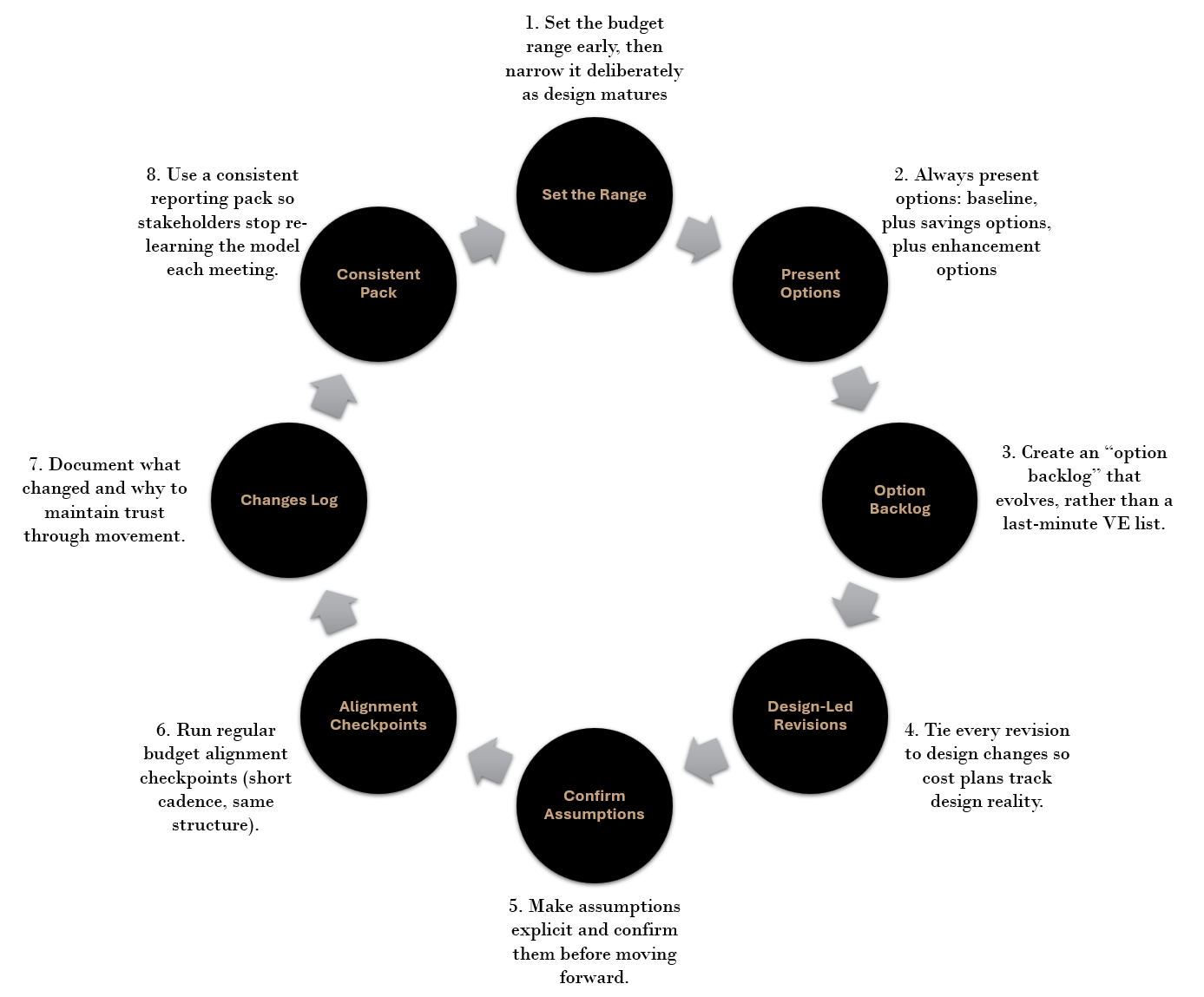
Progressive budgeting isn’t a moment, it’s a method. The teams who do it well follow a simple set of habits that keep scope, cost, and decisions aligned from day one.
1. Set the Range
Set the budget range early, then narrow it deliberately as design matures
2. Present Options
Always present options: baseline, plus savings options, plus enhancement options
3. Option Backlog
Create an “option backlog” that evolves, rather than a last-minute VE list
4. Design-Led Revisions
Tie every revision to design changes so cost plans track design reality
5. Confirm Assumptions
Make assumptions explicit and confirm them before moving forward
6. Alignment Checkpoints
Run regular budget alignment checkpoints (short cadence, same structure)
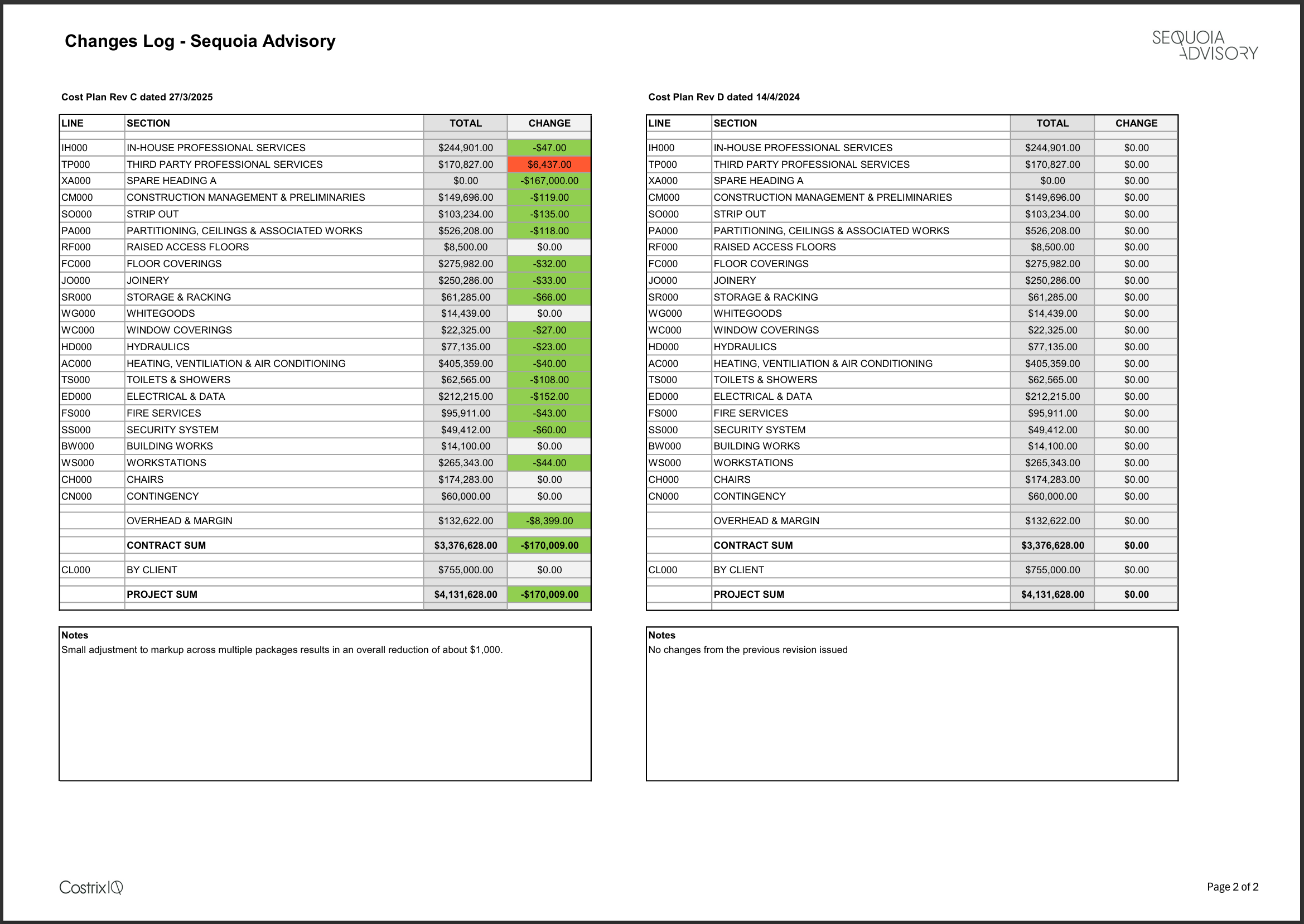
7. Changes Log
Document what changes and why to maintain trust through movement
8. Consistent Pack
Use a consistent pack so stakeholders stop re-learning the model each meeting
CostrixIQ turns progressive budgeting into a repeatable system, not a last-minute scramble.
Built to help teams shape the solution early and continuously, with rapid updates and clear client-ready outputs.
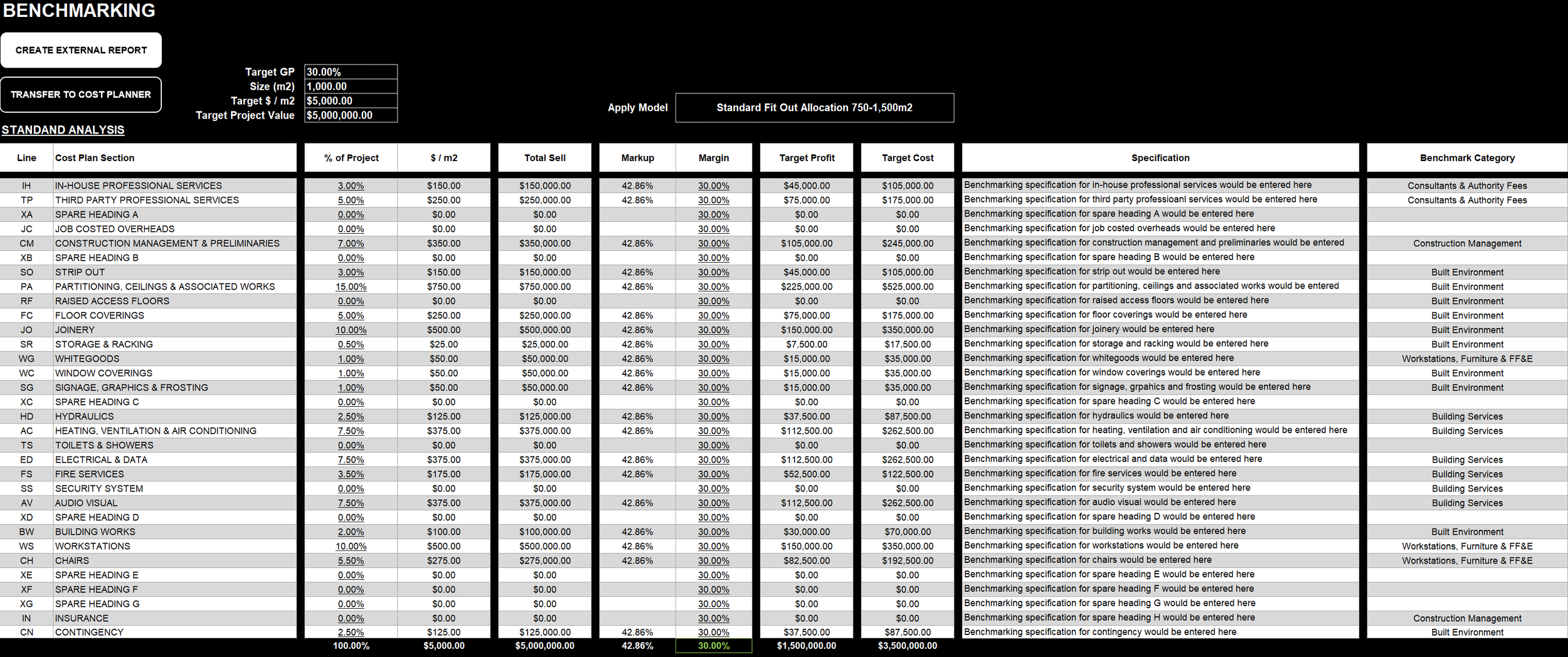
Start with a credible range the client can trust, then tighten it as decisions get made.
SET THE RANGE EARLY WITH BENCHMARKING
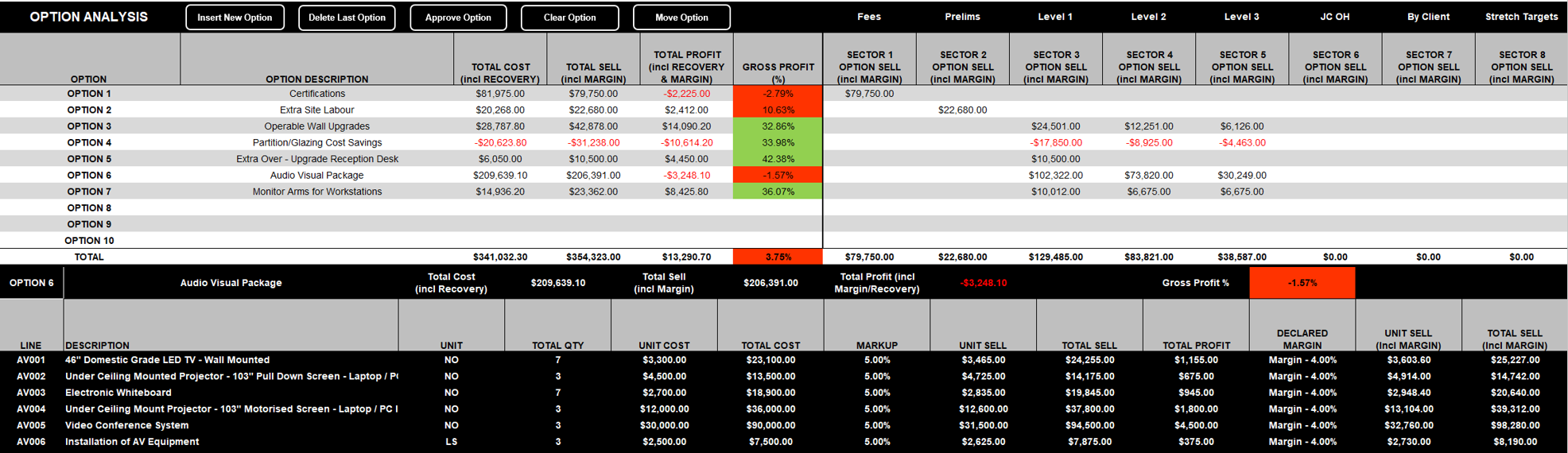
Baseline, savings, and enhancements are clearly separated so the client can shape outcomes, not just react to cuts.
OPTIONS BUILT FOR REAL DECISIONS
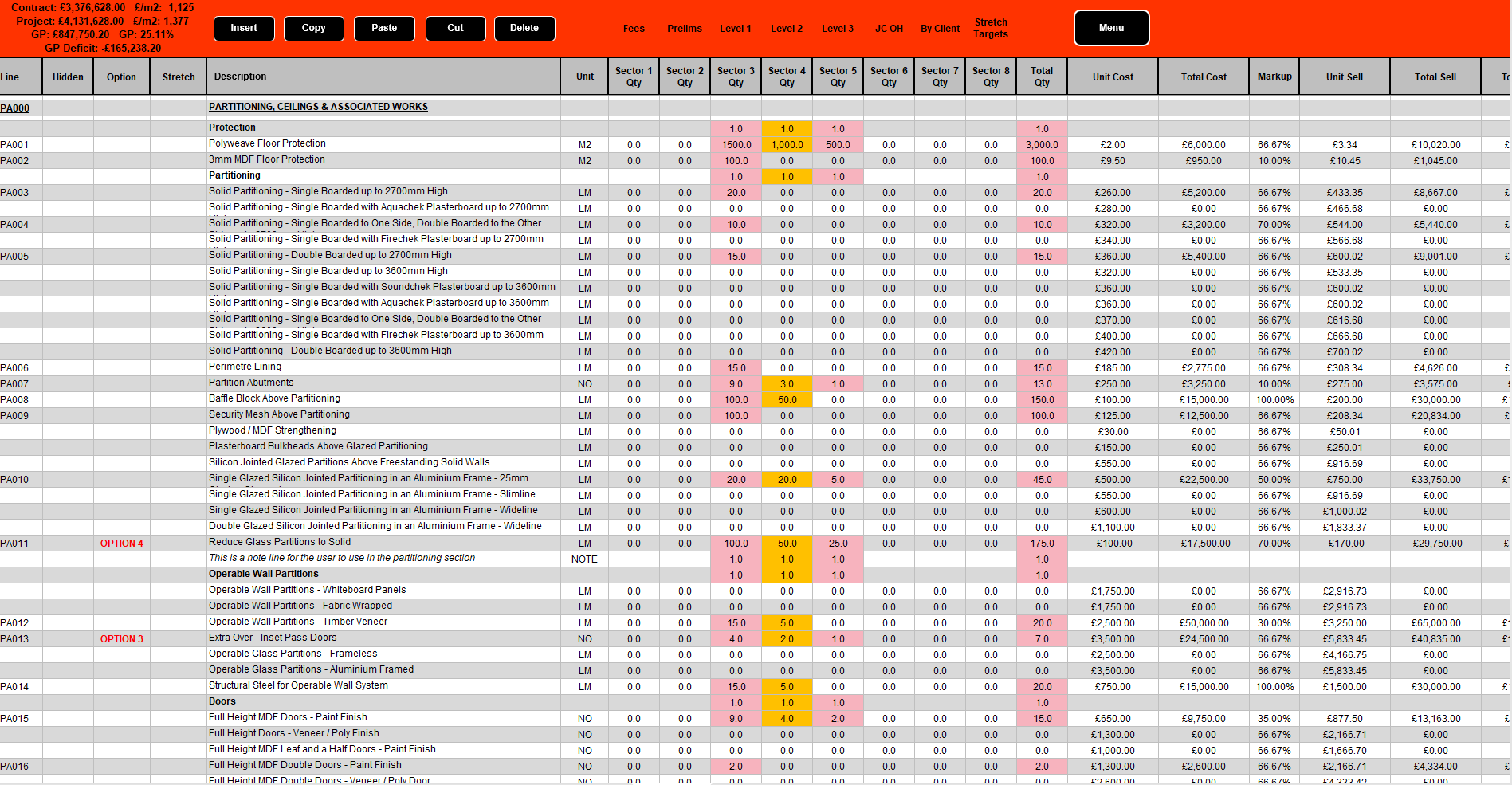
Scope lives inside the model, so you can adjust fast without losing coverage or control.
A SCOPE BACKBONE THAT’S ALWAYS THERE
Build the project in blocks, click them together, and compare pathways in real time.
SCENARIO MODELLING WITH SECTORS AND MULTI-SECTORS


Produce flexible client reports quickly and consistently, without rebuilding spreadsheets every revision.
CLIENT-READY REPORTING, INSTANTLY

Every movement is tracked and explained so confidence stays intact as the budget evolves.
A NO-SURPRISES CHANGES LOG